TATI #01: Can the dead save the living?
I saw Ramell Ross’s Nickel Boys a few days ago.
I drove 20 minutes, took the DC Metro, and an hour later found myself at one of the few theaters showing it. Sometimes you sense that you’re about to encounter something precious even before fully engaging with it. That point of view in Nickel Boys. The moment I saw the trailer, it stirred me. It hinted at a work that truly grappled with what it means to see and witness another’s experience. Then there’s the story itself.
In the early ’60s in the U.S. South, two Black teenagers, Elwood and Turner, meet at a reform school for young boys accused of committing minor offenses. The “academy” is segregated, and it is a place where they’re subjected to abuse and used for free labor. The movie is an adaptation of Colson Whitehead’s book The Nickel Boys, published in 2019. Whitehead himself was inspired to write it after coming across reports in 2013 of the discovery of dozens of unmarked graves on the grounds of the Dozier School for Boys in Florida.
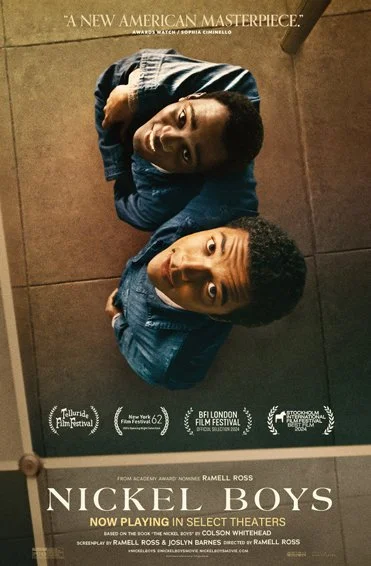
RaMell Ross, Nickel Boys, 2024. Watch the trailer here.
The movie uses two perspectives I’ve never experienced before. The first immerses you in the physicality of the two boys—you’re seeing the world through their bodies. It’s not a technical gimmick but rather an unexpected act of embodiment. You inhabit the boys and view the world as they do. You see Turner through Elwood and Elwood through Turner, what director RaMell Ross refers to as a “sentient perspective”. This perspective has been the most discussed aspect of the movie, but there’s another one that emerges when the timeline shifts to the present. In these moments, the perspective changes subtly yet powerfully. You’re lifted from embodiment to a higher plane, as though you were a spirit looking down, bearing witness. This shift hints at something having gone awry.
Nickel Boys was a tough watch. No violence is shown, nor does it need to be, but it is known. I ached for Elwood and Turner and, through them, for all the boys who were brutalized and killed in that horrific place. I will carry their memory—and the memory of this movie—with me for a long time. I will remember the beauty in these boys and their tender friendship. I will continue to marvel at the cinematography and the direction, which introduced me to new ways of seeing.
I have been thinking about the dead and what we owe them.
I’m thinking, to be precise, about those whose deaths happened in the shadows of impunity. I have been thinking that they should be remembered, and this thinking has morphed into questions: How to remember them? What is the line between a voyeur and a witness? Why should we remember? For me, Nickel Boys is a stirring example of how to honor and elevate the memory of those taken from us.
In 2021, the international airport of Conakry was renamed after Ahmed Sékou Touré, Guinea’s first president. I grew up knowing one thing about Guinea that made me extremely proud: that in 1958, we were the only French colony to say no to remaining in the French Commonwealth. We were led to this no by Sékou Touré, and in many ways, we owe him our independence—or so the story is framed. I also grew up hearing stories about countless uncles and great-uncles who had been imprisoned, tortured, and disappeared under Sékou Touré’s regime.
Since Mamadou Doumbouya’s coup in September 2021, which ended Alpha Condé’s contested presidency, there has been a concerted effort to highlight only the heroic aspects of Touré’s legacy. While the revolutionary is celebrated, the executioner is erased. This selective narrative deeply unsettles me. It hurts to think of the indignity of not even honoring the lives of those who were sacrificed in the name of Sékou Touré’s revolution and to appease his paranoia.
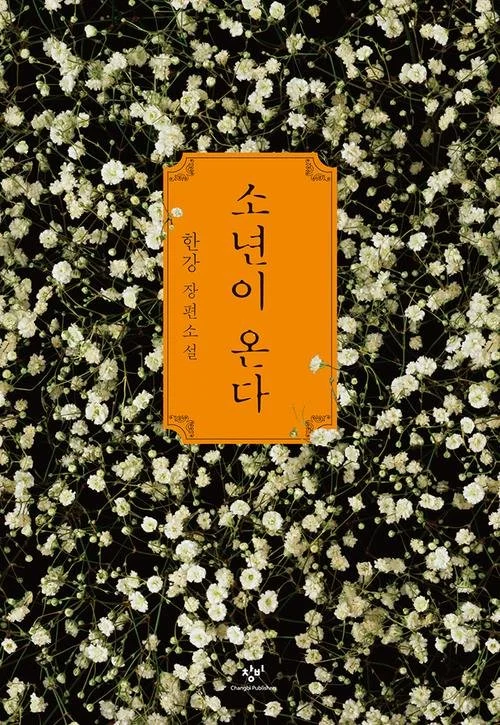
Han Kang, 소년이 온다 (literally "A Boy Comes"), 2014. The title of the English edition is Human Acts.
These questions have led me to delving into Han Kang’s works.
Until the announcement of her Nobel Prize in Literature, I had only read The Vegetarian—a very good and deeply unnerving book. She was awarded the prize “for her intense poetic prose that confronts historical traumas and exposes the fragility of human life.” As I grapple with how to create work about Guinea and the trauma of Sékou Touré’s dictatorship, I turned to Kang’s books for something akin to guidance. This past November, I read Human Acts, about the violent repression of the Gwangju Uprising of 1980, and I’m currently on page 25 of Impossibles adieux (I Do Not Bid Farewell), which addresses the Jeju April 3 Incident. In Kang’s Nobel Lecture, I found my questions reflected in the inquiries that have animated her writing: Can the past help the present? Can the dead save the living?
When writing Human Acts, Kang was deliberate about not interviewing survivors of the Gwangju massacre. She considered the ethics of approaching this story and did not want to make them relive their trauma. The book instead is informed by secondary research and focuses on the story of a boy, Dong-ho, who is addressed only as “you” by an omniscient narrator in the first chapter, “The Boy.” As the book progresses, each chapter seemingly focuses on a different character and perspective, yet all are bound by the memory of Dong-ho, gradually revealing more about him and his fate.
As I finished reading Human Acts I thought of the boy, Dong-ho, and wept. I was amazed at what Kang had done: how extraordinary it was, 44 years later, across continents and languages, to encounter his story and carry his memory, dignified and preserved through fiction.
“Human Acts also began with agony over human violence, but I wanted eventually to reach human dignity—that bright place, where the flowers bloom. ”
This is what has been on my mind as I ran into this new year. I believe we remember the victims of terrible violence to restore the dignity they were denied in life, and in the hope that we may recognize and act against horror when we see it. At least, that’s what I will be striving toward.
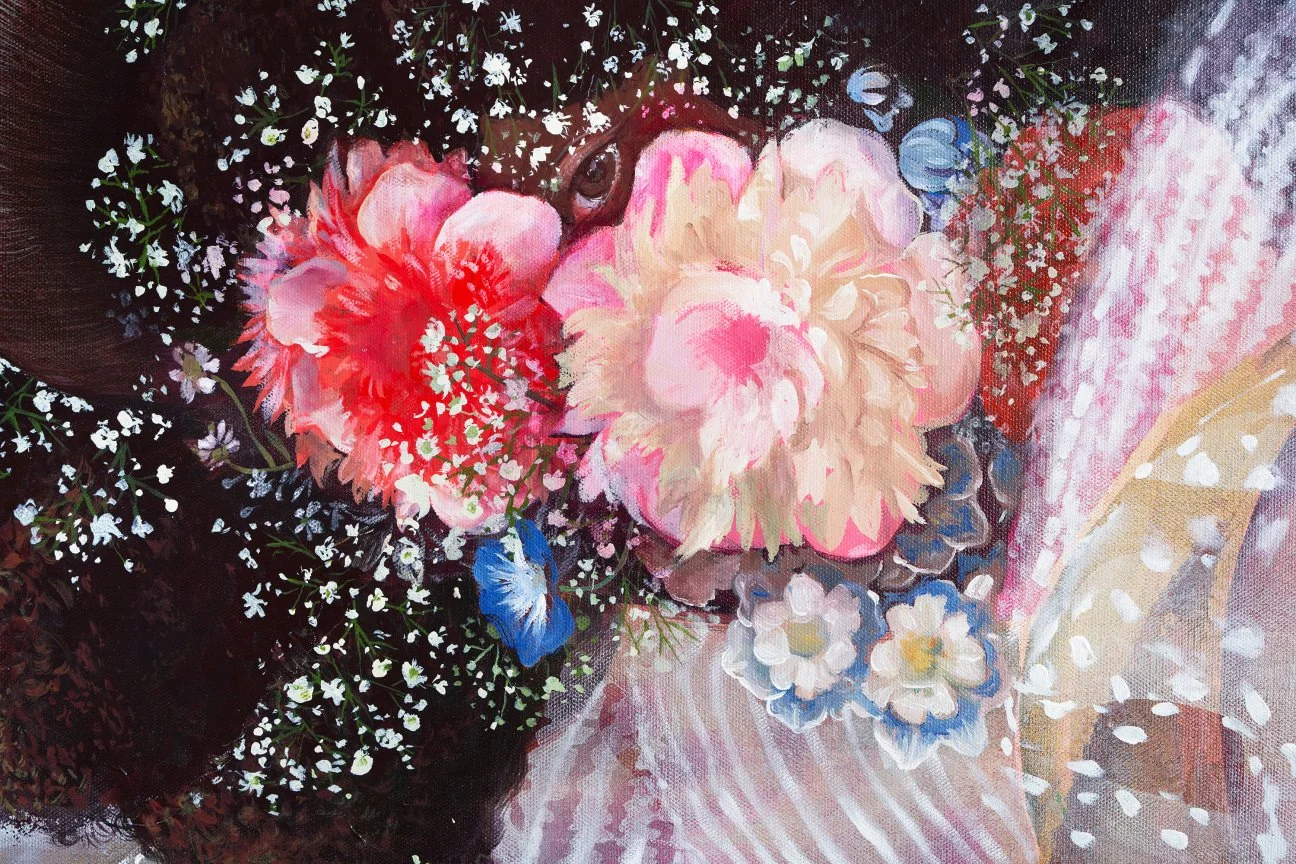
Firelei Báez, On rest and resistance, Because we love you (to all those stolen from among us), 2020
I’m writing this letter from Oaxaca, Mexico. I’m here for a 5-week residency at Pocoapoco, during which I’ll be doing research my new project on Guinea. It will be guided by the following questions:
What does it mean to restore the memory of someone while erasing the suffering of their victims?
Why does Guinea find it so difficult to address the contradictions of Sékou Touré’s legacy?
How does memory become a battlefield, a tool for subjugation, or a means of perpetuating cycles of violence and poverty?
If you’d like see my work or were not able to purchase a copy of i am (not) your mother, the 2024 Paris Photo-Aperture PhotoBook Awards Shortlist exhibition will be at Printed Matters in New York from Jan 16 to Feb 25. The opening reception will be held on Jan 24. Send me or tag me in pictures if you do go!
Thank you for reading this first letter from TATI. This newsletter is a means for me to clarify my thoughts and share updates about my practice. Each letter will center around three works that have moved me and are guiding my work—hence the name tati, which means "three" in Pulaar, my mother tongue. If you have recommendations or insights related to the themes of this letter, a reply is very much welcome.
Until the next one, with care.
Hady